
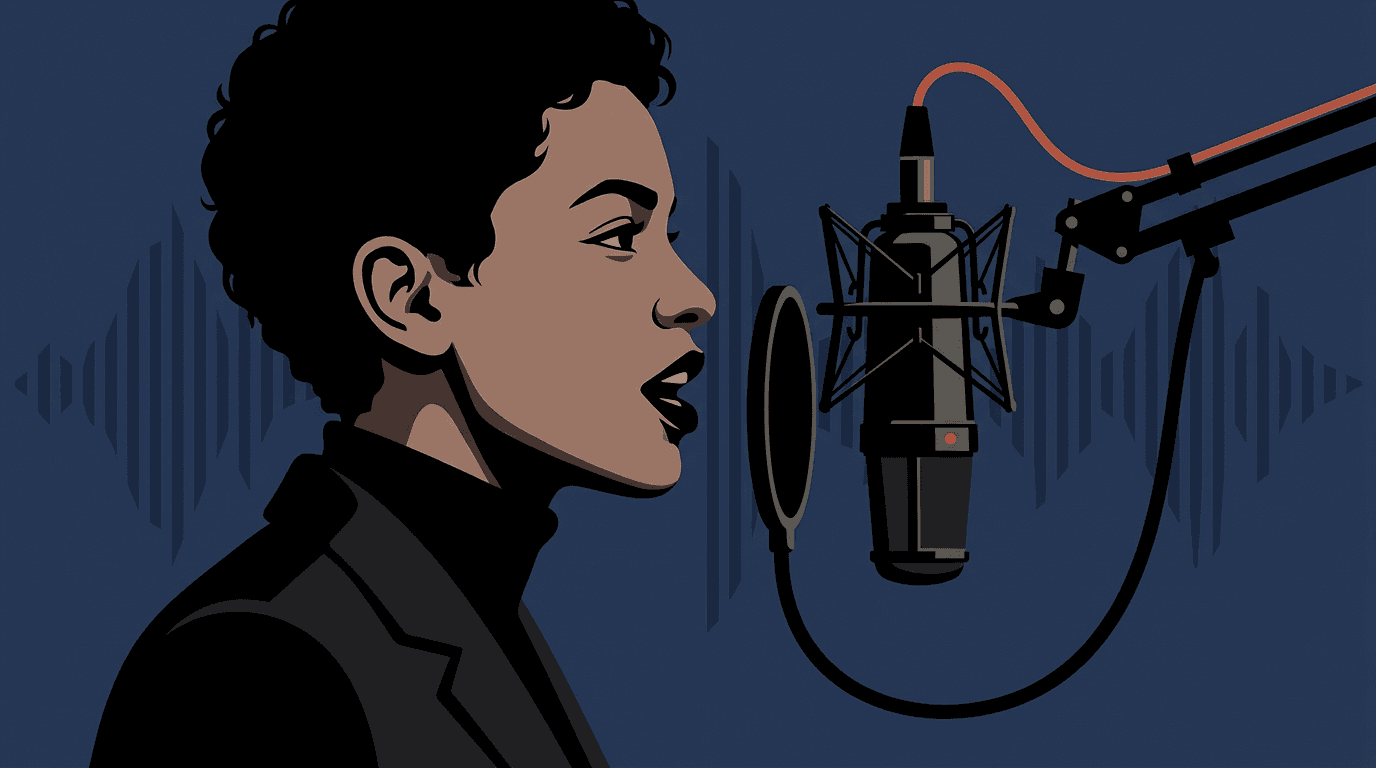
Audiobook narration is a well-established voice performance niche. The audiobook market has grown for years, and every new title needs a voice. If you have vocal talent and the patience for long-form recording, narration is a real career path.
This guide covers what it takes to become an audiobook narrator: the skills, equipment, business realities, and market landscape. It also addresses the elephant in the studio — AI narration — and what it means for both narrators and authors in 2026.
What Audiobook Narrators Actually Do
Narrating an audiobook isn't reading a book aloud. It's performing a book. The job demands sustained vocal performance across hours of recording, character differentiation, and the stamina to maintain quality across a project that might take weeks.
Here's what the work looks like:
- Read and analyze the manuscript. Before recording, you read the entire book. Mark character voices, pronunciation challenges, emotional beats, and pacing notes.
- Record in a treated space. Professional narration requires a quiet, acoustically treated environment. Home studios are common, but the quality standards are high.
- Voice characters consistently. If a novel has eight characters, you need eight distinct vocal approaches — and they need to sound the same in chapter 1 and chapter 30.
- Handle long sessions. A finished hour of audiobook typically requires 2–4 hours of recording time. A 10-hour audiobook means 20–40 hours in the booth.
- Edit and proof. Many narrators handle their own post-production: editing mistakes, matching audio levels, and proofing against the manuscript.
The best narrators are actors who happen to work in a booth instead of on a stage.
Ready to try it yourself?
Create your first audiobook free →Skills You Need
Vocal performance
Range matters. You need a clear, engaging voice for narration and the ability to create distinct character voices. This doesn't mean you need to do impressions — it means consistent, subtle vocal differentiation. A gruff older character should sound different from a nervous teenager, and both should sound different from your narrator voice.
Stamina
Audiobook recording is a marathon. You're talking for 4–6 hours per session, maintaining energy, consistency, and clarity throughout. Vocal fatigue is real. Experienced narrators develop techniques to preserve their voice across multi-week projects.
Pacing and timing
Reading speed, pause placement, and rhythm all affect how an audiobook feels. Too fast and listeners lose comprehension. Too slow and they lose interest. Good narrators develop an instinct for pacing that matches the genre and the author's style.
Technical skills
Many narrators are also their own engineers. You'll need to understand microphone technique, audio editing software (Audacity, Adobe Audition, Reaper, Logic Pro), noise reduction, and mastering standards. ACX and other platforms have specific technical requirements for submitted audio.
Business skills
Freelance narration is a business. You need to market yourself, manage client relationships, handle contracts, invoice, and handle the financial side of self-employment.
Equipment and Setup
A professional home studio doesn't require a massive investment, but quality matters.
Essentials
- Microphone. Large-diaphragm condenser mic. Common starting choices: Audio-Technica AT2020, Rode NT1-A, or Neumann TLM 102 if budget allows. Budget: $100–$800.
- Audio interface. Converts microphone signal to digital. Focusrite Scarlett Solo or 2i2 are widely used in home studios. Budget: $100–$200.
- Headphones. Closed-back monitoring headphones for accurate playback. Audio-Technica ATH-M50x is a common choice. Budget: $100–$200.
- Pop filter. Reduces plosive sounds (p's and b's). Budget: $10–$30.
- Acoustic treatment. Foam panels, bass traps, or a portable isolation booth. The room matters as much as the mic. Budget: $200–$1,000+.
- DAW (Digital Audio Workstation). Audacity (free), Reaper ($60 personal license), Adobe Audition (subscription), or Logic Pro (~$200). Budget: $0–$200.
Total starting investment
A functional home recording setup typically runs $500–$1,500. A higher-end setup runs $1,500–$3,000+.
How Much Audiobook Narrators Earn
Rates vary widely based on experience, reputation, and the payment model. The numbers below are typical industry ranges — individual results depend on genre, client, and how well you market yourself.
Per finished hour (PFH)
Most audiobook work is priced per finished hour — the length of the final mastered audiobook, not the time spent recording.
- Beginners: $50–$150 PFH (ACX itself notes some new narrators start as low as $10–$100)
- Mid-career narrators: $150–$300 PFH
- Experienced narrators: $300–$500+ PFH
- Top-tier and celebrity narrators: $1,000+ PFH
These ranges are typical industry figures aggregated from narrator coaches, ACX guidance, and freelance marketplace data; individual rates vary widely by project type, genre, and reputation. ACX's published budgeting guidance suggests $200 PFH for narration as a reasonable baseline for indie author projects. For the full breakdown, see our audiobook production cost analysis.
Royalty share
ACX offers a royalty-share model where narrators work for free upfront in exchange for a percentage of audiobook sales. This can pay off for popular titles but is a gamble — many royalty-share audiobooks earn very little.
Flat fee
Some authors and publishers pay a flat project fee instead of PFH. This is common for corporate narration, e-learning, and non-retail audiobooks.
Income reality
General salary databases such as ZipRecruiter report the average audiobook narrator's annual income in roughly the $70,000–$80,000 range as of 2025. Established full-time narrators with steady client bases can reach six figures, and top earners go higher. But that level takes years of building reputation, skills, and relationships — most beginners earn well below average for their first few years.
Finding Work
ACX (Audible)
ACX is the largest open marketplace for audiobook narration in North America. Authors post projects, narrators audition, and work is contracted through the platform. It's competitive — popular titles attract dozens of auditions.
A note on AI narration: ACX's open submission process accepts human narration only. Audible runs a separate AI-narration program, but it operates by invitation for traditional publishers, not through ACX. So if you're a narrator on ACX, you're competing on human performance — and authors uploading through ACX need a human narrator.
Voices by INaudio (formerly Findaway Voices)
Findaway Voices ceased operating in August 2025. Its distribution business was split into two: Spotify for Authors (for getting audiobooks onto Spotify) and Voices by INaudio (wide distribution to retailers including Audible, Apple Books, Kobo, and others).
Importantly, the old Findaway narrator marketplace was wound down in the transition. Voices by INaudio is a distribution platform — it does not match narrators with authors. If you're a narrator looking for work, the active marketplaces are ACX, freelance platforms (Reedsy, Voices.com), and direct outreach.
Direct outreach
Many experienced narrators build direct relationships with publishers and authors. This bypasses marketplace competition and often leads to better rates and ongoing work.
Narration agencies and publishers
Audiobook publishers cast their own narrators directly. Major examples include Recorded Books / RBmedia (which includes the Tantor Media imprint) and Blackstone Publishing. These are often more selective than open marketplaces but offer steady, professional work for narrators they trust.
The AI Question
Here's where the conversation gets complicated.
AI voice platforms can now generate narration that sounds natural and handles long-form content reliably. For many projects, the quality is now good enough to change the economics of audiobook production.
What AI narration means for narrators
AI narration doesn't replace all narrators. It mostly serves the books that wouldn't have been recorded at all under traditional economics.
The majority of self-published books never get audiobook versions because the $2,000–$4,000 production cost is prohibitive. AI production platforms like Midsummerr bring that cost down to $450 for a full-cast audiobook with music and sound effects. These are audiobooks that wouldn't have existed otherwise.
There's also a hybrid path worth knowing about. ACX has piloted a "Voice Replicas" beta inviting select narrators to create and monetize AI-generated replicas of their own voices — a way for established narrators to participate in AI production rather than be displaced by it.
Top narrators with established brands and loyal followings will continue to command premium rates. The market for excellent human performance isn't disappearing — it's just no longer the only option.
What AI production means for authors
If you're an author deciding between hiring a narrator and using AI production, the honest comparison is:
| Factor | Human Narrator | AI Production (Midsummerr) |
|---|---|---|
| Cost (90K words) | $2,000–$4,000+ (typical, based on industry PFH × ~10 hours) | $450 |
| Character voices | Typically one narrator voices all (full-cast or dual-narrator productions exist but are less common) | Distinct voice per character |
| Music & SFX | Typically not included | Included |
| Turnaround | Typically 4–12 weeks | Typically 1–2 days |
| Revisions | Negotiated per contract | Built-in editing in self-serve |
| Emotional nuance | Human artistry | Improving rapidly |
Comparison reflects typical industry conditions; specific projects, narrators, and contracts vary.
Neither option is universally better. A great human narrator brings artistry that AI hasn't fully matched. AI production delivers a complete, multi-layered product at an accessible price point. The right choice depends on your priorities.
For a deeper dive into this comparison, see Midsummerr vs ACX vs ElevenLabs.
Should You Become an Audiobook Narrator?
If you love performing, have genuine vocal talent, and are willing to invest in skills and equipment, narration is a viable career. The market is large and growing.
But go in with realistic expectations:
- It takes time to build a career. Expect a long runway before narration becomes a primary income source.
- The market is competitive. Especially on ACX, where every project attracts many auditions.
- AI will reshape the landscape. Not by replacing all narration, but by expanding the audiobook market with productions that wouldn't have existed at traditional costs. Narrators who specialize, build brands, and deliver exceptional performance will continue to thrive.
The Author's Perspective
If you're reading this as an author trying to decide whether to hire a narrator or produce with AI, here's the practical summary:
Hire a narrator if you have the budget, value specific human vocal artistry, and are producing a title where the narrator's name adds marketing value.
Use AI production if you want a full-cast audiobook with music and sound effects, need accessible pricing, value speed and creative control, and write in genres where character differentiation and atmosphere matter (fantasy, romantasy, romance, mystery, thrillers).
Listen to what AI production sounds like today: Frankenstein | Alice in Wonderland | Jane Eyre
Then check pricing to see what your project would cost. You might be surprised.